Tabriz Grand Bazaar

Tabriz

Tabriz Grand Bazaar
Introduction to Tabriz Grand Bazaar: A UNESCO Masterpiece
Geographical Heart & UNESCO Recognition
A Living Monument of Urban Planning

Tabriz Grand Bazaar

Step into the Tabriz Grand Bazaar, and you are entering not just a market, but the living, breathing economic and cultural artery of northwestern Iran. As the world’s largest covered traditional bazaar, this architectural masterpiece stands as a powerful testament to the city of Tabriz’s pivotal role on the historic Silk Road. Dating back over a millennium, the Tabriz Bazaar reached the peak of its glory in the 13th century when Tabriz served as the capital of the Safavid Empire, transforming it into the most important commercial hub between the East and the West. More than a simple exchange of goods, a journey through this labyrinthine structure is an essential exploration of Persian history, sophisticated urban planning, and the enduring spirit of commerce, offering a unique glimpse into Iran's rich historical attractions.

Introduction to Tabriz Grand Bazaar: A UNESCO Masterpiece

Introduction to Tabriz Grand Bazaar: A UNESCO Masterpiece

The Tabriz Grand Bazaar is geographically located in the very heart of Tabriz, East Azerbaijan Province, Iran. Unlike many historical structures, it is not a ruin but a fully functional, dynamic economic center, pulsating with centuries of trade and cultural exchange. This complex is an extraordinary urban masterpiece, consisting of interconnected sub-bazaars, timchehs (vaulted halls), serais (courtyards), and caravanserais, all constructed primarily from brick with magnificent arched ceilings and domes. Its vast area, estimated at about one square kilometer, makes it the largest covered market in the world, a truly monumental site reflecting the immense wealth and power generated by continuous international trade.

Geographical Heart & UNESCO Recognition

Geographical Heart & UNESCO Recognition
The Tabriz Historical Bazaar spans a significant area in downtown Tabriz. Its strategic location at the crossroads of the Silk Road—connecting the Arabian Sea and the Persian Gulf to the Mediterranean—was the key to its prosperity. This unique positioning allowed it to function as a bridge between diverse cultures and economies. In 2010, the complex was inscribed onto the UNESCO World Heritage List, becoming a symbol of the continuous and flourishing trade traditions of the region. This status recognized its exceptional universal value as the most complete and historically significant example of a traditional Iranian commercial-urban structure, solidifying the Tabriz Bazaar as an irreplaceable piece of world heritage. The UNESCO buffer zones ensure that the surrounding urban area is also protected, preserving the historical context of the Tabriz Grand Bazaar.

A Living Monument of Urban Planning

A Living Monument of Urban Planning
A visit to the Tabriz Grand Bazaar is an essential pilgrimage for any serious traveler seeking the deepest roots of Iranian culture and trade. This comprehensive Tabriz Bazaar Travel Guide will navigate you through its unique sections, decode its historical context, and highlight its essential role as a social and religious center, ensuring you gain a full appreciation for this extraordinary remnant of Iranian civilization. Its designation as a UNESCO World Heritage Site secured its place as a global treasure, recognizing the unparalleled integrity and complexity of the structure and its remarkable adaptation to urban life through millennia.

Historical Grandeur & The Silk Road Legacy of Tabriz Bazaar

Historical Grandeur & The Silk Road Legacy of Tabriz Bazaar

The history of the Tabriz Historical Bazaar is inseparable from the Silk Road. For centuries, it served as the crucial transit point for goods like spices, silks, precious metals, and carpets traveling between China, India, Europe, and Africa. During the 13th and 14th centuries, particularly under the Ilkhanid and Safavid dynasties, the Tabriz Bazaar thrived, attracting merchants, bankers, and artisans from across the globe.

Crossroads of Ancient Empires

Tabriz became the capital of the Mongol Ilkhanid dynasty in the 13th century, which cemented its status as a major international trading post. Even after losing its capital status in the 16th century, the city and the Tabriz Grand Bazaar remained an economic superpower until the end of the 18th century. This long, continuous history of trade makes the Tabriz Grand Bazaar one of the world’s most enduring commercial institutions. Its connections extended to vibrant cities like Isfahan and beyond, creating a network of economic prosperity across Persia.

Beyond Trade: A Societal Nexus

The function of the Tabriz Bazaar extends far beyond mere commerce. Its internal architecture incorporates important social, religious, and political structures. Mosques like the massive Jameh Mosque and smaller Hojjat-ol-Eslam Mosque served as religious and legal centers where major business contracts were sealed. Bathhouses (Hamams) were essential for cleanliness and social gatherings, while schools (Madrasahs) ensured the transmission of learning. Furthermore, merchants of the Tabriz Historical Bazaar historically wielded significant political power, playing a vital role in events like the Constitutional Revolution of the early 20th century, solidifying the Tabriz Bazaar as the true civic and historical center of the city.

Architectural Marvels of the Tabriz Grand Bazaar

The architecture of the Tabriz Grand Bazaar is a triumph of Islamic-Iranian urban design, perfectly adapted to the cold, mountainous climate of the region. It showcases a sophisticated approach to utilizing natural materials and passive climate control, making it a masterpiece of engineering and aesthetics.

The Intricate Labyrinth: Rastehs, Timchehs, and Serails

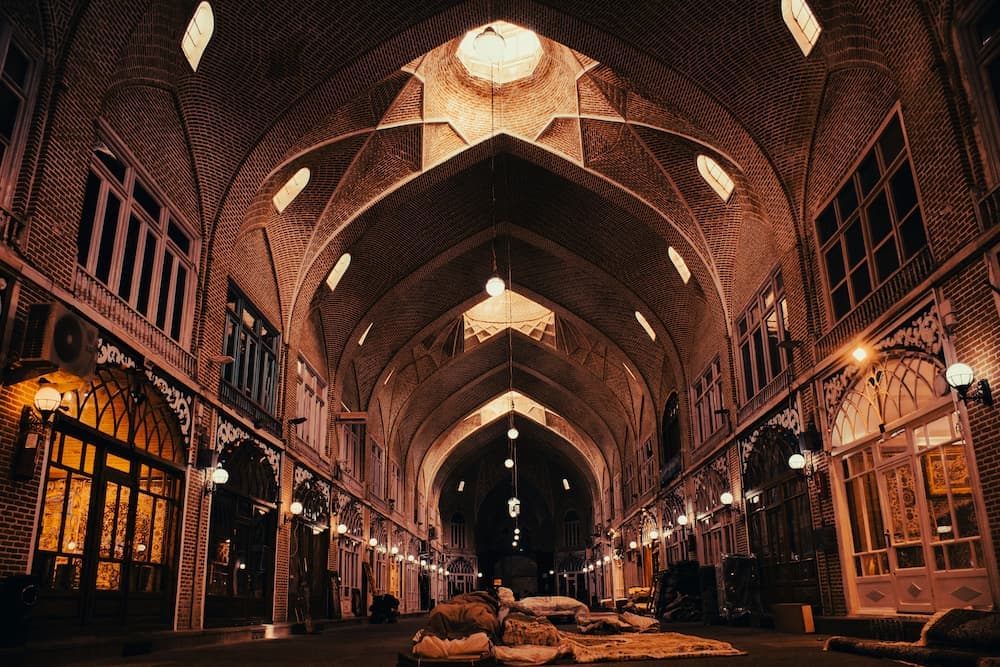
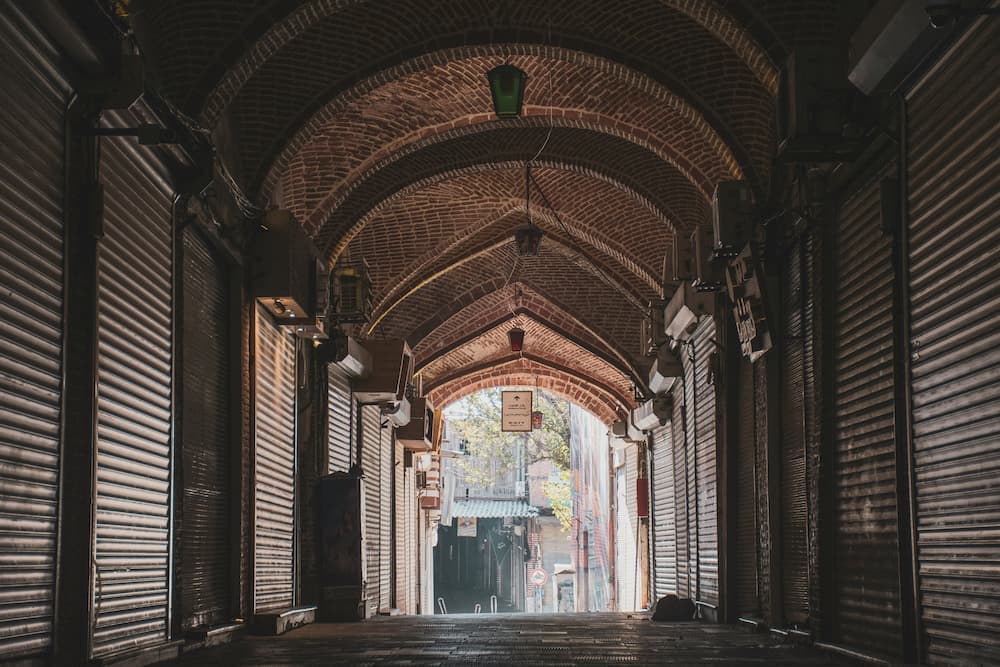
The complex is organized into a main maze of interconnected corridors, each dedicated to a specific craft or product. Rastehs (Corridors) are the long, vaulted main streets, serving as the arterial roads of commerce. Key examples include the Amir Bazaar Rasteh (known for gold and jewelry) and the Mozaffariyeh Rasteh (famous for carpets). Timchehs (Vaulted Halls) are magnificent, high-domed halls that serve as secure, specialized selling spaces, often surrounding a central courtyard. Serails (Caravanserais) are open courtyards surrounded by brick rooms that provided secure lodging and storage for traveling merchants. This intricate layout is a marvel of urban planning, perfect for a deeply immersive cultural tour of Iran.

Climate-Adaptive Construction: Brickwork & Domes

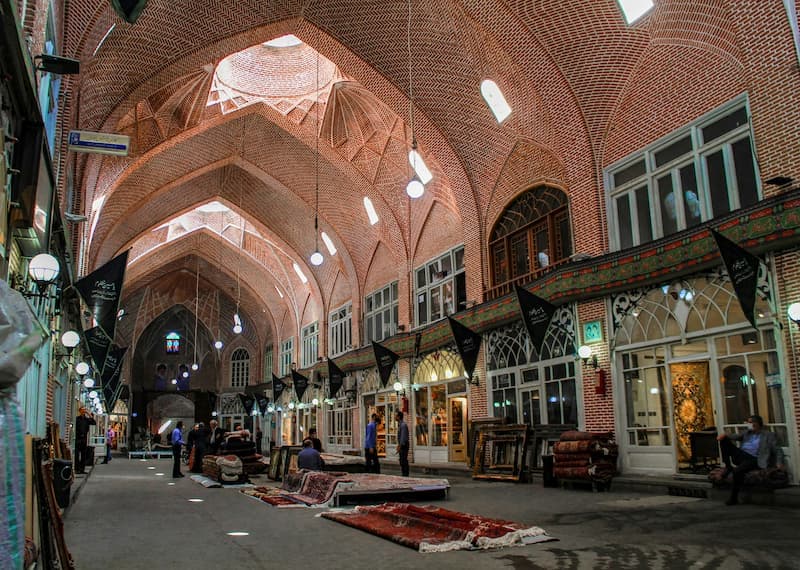
The primary construction material is locally-made brick. The genius of the Tabriz Bazaar lies in its sophisticated brick vaulting and dome systems. These structures not only supported the vast roofs but were intentionally designed to enhance passive climate control. The high domes allow hot air to rise, and small, strategically placed skylights, known as roshan-dan, allow natural light to filter in while minimizing direct sun exposure. This structural design ensured the interior remained relatively cool in summer and surprisingly warm during the harsh Tabriz winters, a critical feature for the mountainous climate.

Mozaffariyeh: The Jewel of Persian Carpets

The Timcheh of Mozaffariyeh is the architectural and economic jewel of the Tabriz Grand Bazaar. Built in the late 19th century during the Qajar era, this spectacular vaulted hall is the global epicenter of the Iranian carpet trade. The Timcheh is not only famous for its commercial activity but for its breathtaking architecture, featuring soaring, symmetrical brick arches and domes. Its impressive structure, with ornate brickwork and subtle natural lighting, makes it one of the most photographed and culturally significant spots, symbolizing the enduring luxury and quality associated with the Tabriz Grand Bazaar.

Economic Specialization & Enduring Resilience of the Tabriz Bazaar

The organization of the Tabriz Bazaar follows a clear, efficient system of economic specialization, where specific rastehs and timchehs focus exclusively on one type of trade, optimizing the movement of goods and capital. This meticulous segmentation fostered a stable, self-regulating commercial community.

Global Epicenter of Persian Carpet Trade

Tabriz has been synonymous with the finest Persian carpets for centuries. The Mozaffariyeh section is devoted entirely to this industry, functioning essentially as a stock exchange for carpets. Merchants here deal in high-quality, hand-woven rugs from Tabriz (which have their own distinctive knotting and design), as well as fine products from Kerman, Qom, Kashan, and other famous weaving centers. The sheer volume and quality of trade here make the Tabriz Grand Bazaar a crucial reference point for the global carpet market. The knowledge and expertise of the Tabriz Bazaar carpet dealers are considered unparalleled.

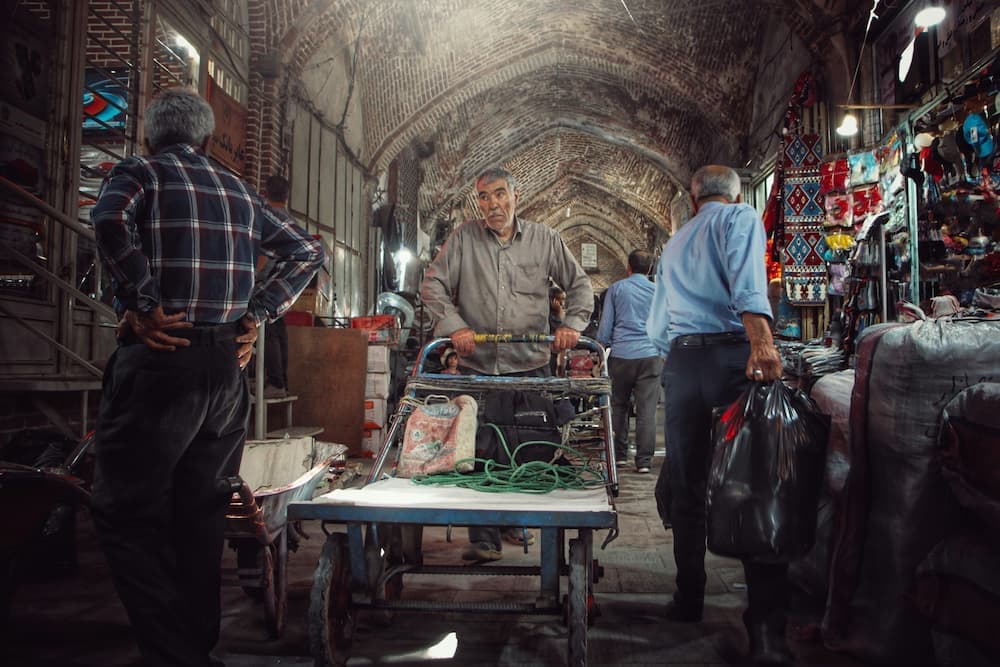
From Gold to Spices: The Diverse Bazaari Economy

Walking through the various specialized sections of the Tabriz Bazaar reveals its historical complexity and self-sufficiency:
  • Amir Bazaar: Dedicated to gold, jewelry, and luxury items.
  • Kaffashan Bazaar: The corridor for shoemakers and leather goods.
  • Saffari Bazaar: The historic area for coppersmiths and metal-working.
  • Sadeghiyeh Bazaar: Known for spices, nuts, and traditional confectionery.
  • Davafroosh-bashi Bazaar: The specialized section for traditional medicine and herbs.
This diversity highlights the bazaar's role not just as a market, but as a complete economic ecosystem, sustaining various crafts and trades.

A Story of Rebirth: Earthquakes & Restoration

The enduring history of the Tabriz Bazaar is not one of continuous prosperity but of remarkable resilience. Tabriz is in a seismically active zone, and the bazaar has been severely damaged by major earthquakes, notably in 1641 and 1780. The local population and powerful merchant guilds immediately took on the colossal task of reconstruction. The current, robust architectural form of the Tabriz Grand Bazaar is largely a result of these post-1780 efforts. This meticulous restoration of the Tabriz Historical Bazaar complex, a joint effort between the government and private sector, was awarded the prestigious Agha Khan Award for Architecture in 2013, recognizing its unique model of participatory conservation and revitalization, showcasing Iran's commitment to preserving sites like Persepolis.

What to Do at Tabriz Grand Bazaar

Explore Mozaffariyeh Timcheh

Immerse yourself in the world of Persian carpets at the legendary Mozaffariyeh. Marvel at the intricate designs, observe skilled merchants, and perhaps even purchase a hand-knotted masterpiece.

Wander Through Specialized Rastehs

Discover the diverse sections, from the gleaming gold and jewelry of Amir Bazaar to the aromatic spices of Sadeghiyeh, and the traditional leather goods in Kaffashan. Each corridor offers a unique glimpse into traditional Iranian commerce.

Sample Local Tabrizi Cuisine

Seek out small, authentic eateries (dizi sara) within the bazaar complex to savor local delicacies like Dizi (Abgoosht), Kofteh Tabrizi, or traditional sweets such as Nogha and Eris.

Admire the Architecture and UNESCO Heritage

Take time to appreciate the masterful brickwork, vaulted ceilings, and natural lighting of this UNESCO World Heritage site. Observe the sophisticated climate control designs and imagine centuries of traders passing through.

Your Practical Tabriz Bazaar Travel Guide

Best Time to Visit

The best time to visit Tabriz and its bazaar is during the late spring and early autumn (May to June and September to October) when the weather is mild. Winter can be very cold, and summer can be quite hot, though the covered nature of the Tabriz Grand Bazaar offers some relief. Visit on a weekday morning (Saturday to Thursday) for the most vibrant experience and to avoid crowds.

Getting There

Due to its central location, the Tabriz Grand Bazaar is easily accessible. The best way to enter and begin exploring is from the central Rasteh near the Jameh Mosque or the adjacent Saat Gonbadi (Clock Tower Square). Public transportation, including the Tabriz Metro (at central stations like Saat Square) and numerous bus routes, serves the area. Taxis are also readily available, though be prepared to walk once inside the car-free historical structure.

Entrance Fee

There is no general entrance fee to enter the Tabriz Grand Bazaar itself. However, some specific museums or historical buildings within the complex might have a small admission fee, typically around $2-5 USD for foreign tourists.

Visiting Hours

The Tabriz Bazaar is generally operational from Saturday to Thursday, typically opening around 8:30 AM and closing between 5:00 PM and 8:00 PM, depending on the section and season. It is largely closed on Fridays and official public holidays, especially during Islamic mourning months like Muharram.

Frequently Asked Questions

Author: Deytrips Team
Was this content helpful?

Discover the Soul of Ancient Persia

Ready to walk the paths of ancient traders and experience the vibrant heart of Iran? Our customized tours offer an unparalleled journey through Tabriz and beyond.

Plan Your Iran Adventure