National Museum of Iran

Tehran
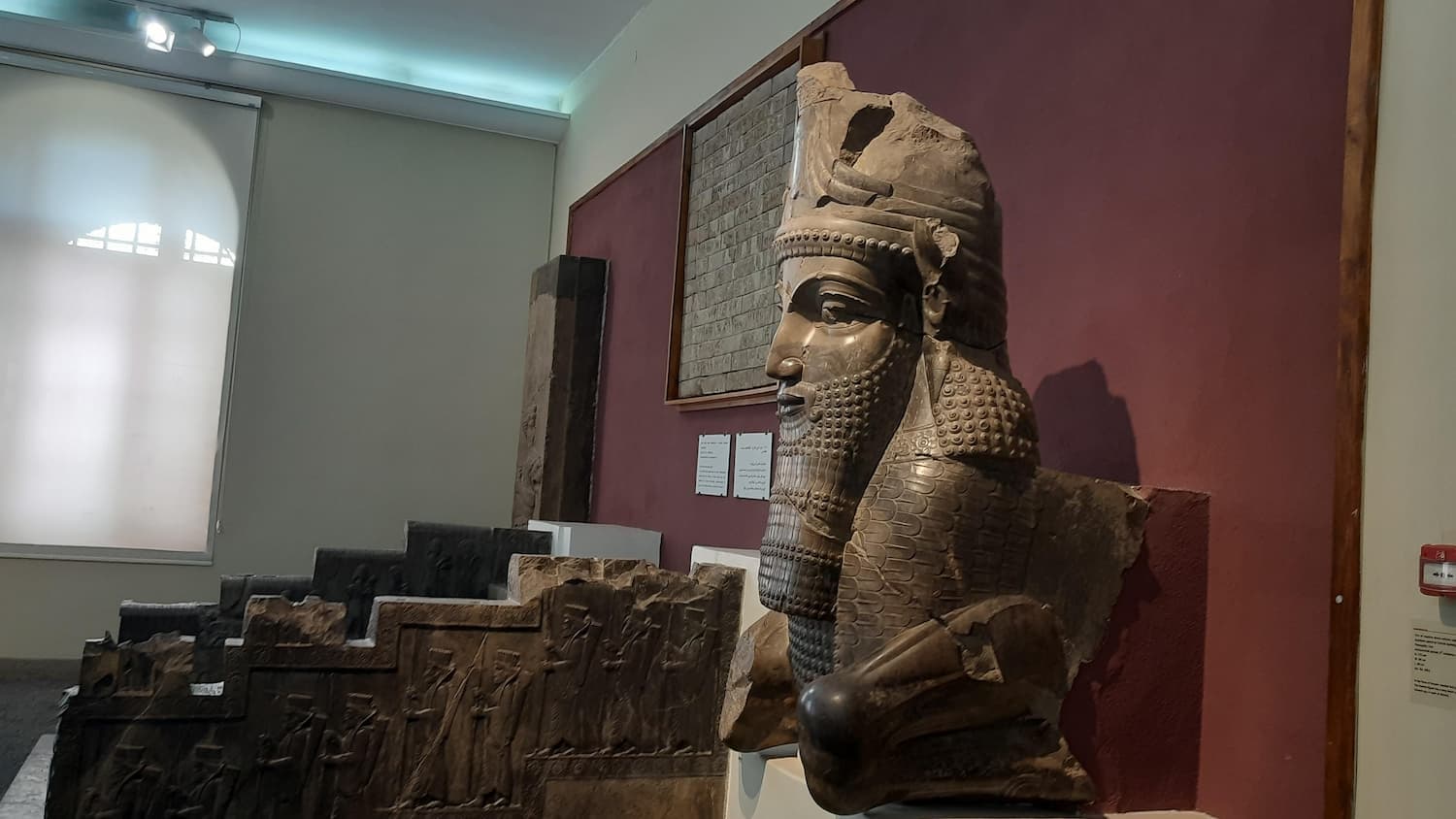
National Museum of Iran
Understanding the National Museum of Iran: A Dual Identity
The Dual Identity: Ancient and Islamic Eras
Gallery image 4

National Museum of Iran

Welcome to the beating heart of Persian civilization. The National Museum of Iran is not just a building filled with relics; it is a time machine that transports you across 30,000 years of human history on the Iranian plateau. If you are an international traveler seeking to understand the deep, complex, and magnificent story of one of the world’s oldest cultures, this museum in Tehran is your essential starting point for exploring Iran's historical attractions. It stands as the unparalleled jewel among Iran’s Museums.

Understanding the National Museum of Iran: A Dual Identity

Understanding the National Museum of Iran: A Dual Identity

The National Museum of Iran (Muzeh-ye Melli-ye Iran) is, without question, the most important cultural institution in the country. It is essentially two distinct, world-class museums housed in separate buildings—the Museum of Ancient Iran (Muzeh-ye Irān-e Bāstān) and the Museum of the Islamic Era (Muzeh-ye Dowrān-e Eslāmi)—that collectively form this larger, invaluable complex. Located centrally on Imam Khomeini Street in Tehran, the National Museum of Iran serves as the ultimate repository for Iran’s archaeological finds and historical artworks. Its importance transcends tourism; it is a cornerstone of Iranian identity, showcasing the continuous cultural evolution from pre-history up to the Qajar dynasty. For anyone interested in the rich tapestry of cultural tours of Iran, the museum acts as the central hub where the most spectacular finds from places like Persepolis, Shush, and Lorestan are collected and preserved for the world. To truly understand the timeline of Iran, one must first grasp the depth of its collection here.

The Dual Identity: Ancient and Islamic Eras

The Dual Identity: Ancient and Islamic Eras
What makes the National Museum of Iran truly unique is its thoughtful division into two distinct yet complementary entities. The Museum of Ancient Iran houses relics spanning from the Paleolithic age through the Sassanid Empire, offering a profound look into Iran's pre-Islamic heritage. In contrast, the Museum of the Islamic Era picks up the narrative from the 7th century onwards, showcasing the breathtaking artistic, scientific, and philosophical advancements of the Islamic period in Iran. This dual structure ensures a comprehensive and chronological journey through time.

A Cornerstone of Iranian Heritage

More than just a tourist attraction, the National Museum of Iran is a living testament to Iran's enduring civilization. Each artifact, from humble stone tools to majestic imperial sculptures, tells a story of innovation, resilience, and profound cultural depth. For international visitors, it offers an unparalleled introduction to Persian culture, laying the groundwork for deeper explorations of archaeological sites and historical cities across the nation.

A Journey Through Time: History and Vision of the National Museum of Iran

The origins of the National Museum of Iran are deeply tied to the beginnings of modern archaeology in the country and a national desire to protect and showcase Iranian heritage. The current complex began with the Museum of Ancient Iran, a visionary project that laid the foundation for preserving Iran's priceless past.

The Birth of a National Treasure (Museum of Ancient Iran)

The Birth of a National Treasure (Museum of Ancient Iran)
The foundation for the first structure, the Museum of Ancient Iran, commenced in late 1933. Its construction was based on a plan by the renowned French architect, Mr. Andre Godard, during the reign of Reza Shah Pahlavi. Diligently overseen by Mr. Hussein Jowdat, head of the Ministry of Culture, the building was finished and inaugurated in 1937. This marked it as Tehran’s oldest museum and the first dedicated national museum in the country. This establishment was a crucial step in ensuring that Iran’s priceless cultural heritage, often targeted by foreign excavations, remained on Iranian soil, dedicated primarily to pre-Islamic archaeological finds.

Evolution to the Islamic Era Museum

Following the immense growth of its collections and the need to properly exhibit post-Islamic heritage, the second building, the Museum of the Islamic Era, was conceived. It followed a plan shaped like the Sassanid-era Chalipa (a cross-like or four-arch design) and was finished in 1996 AD, specifically designed to showcase the richness and diversity of Islamic art and philosophy in Iran. Today, the entire National Museum of Iran complex is managed by 13 specialized sections, demonstrating its role as a leading global institution for research, documentation, and conservation.

Architectural Splendor: Echoes of Empires at the National Museum of Iran

The architecture of the National Museum of Iran is a striking narrative in itself, meticulously designed to reflect the very history it houses. Each building stands as a masterpiece, intentionally linking contemporary purpose with ancient Persian grandeur, making the visit to the National Museum of Iran, Tehran, a journey for the eyes as well as the mind.

The Grandeur of the Museum of Ancient Iran (Main Building)

The Grandeur of the Museum of Ancient Iran (Main Building)
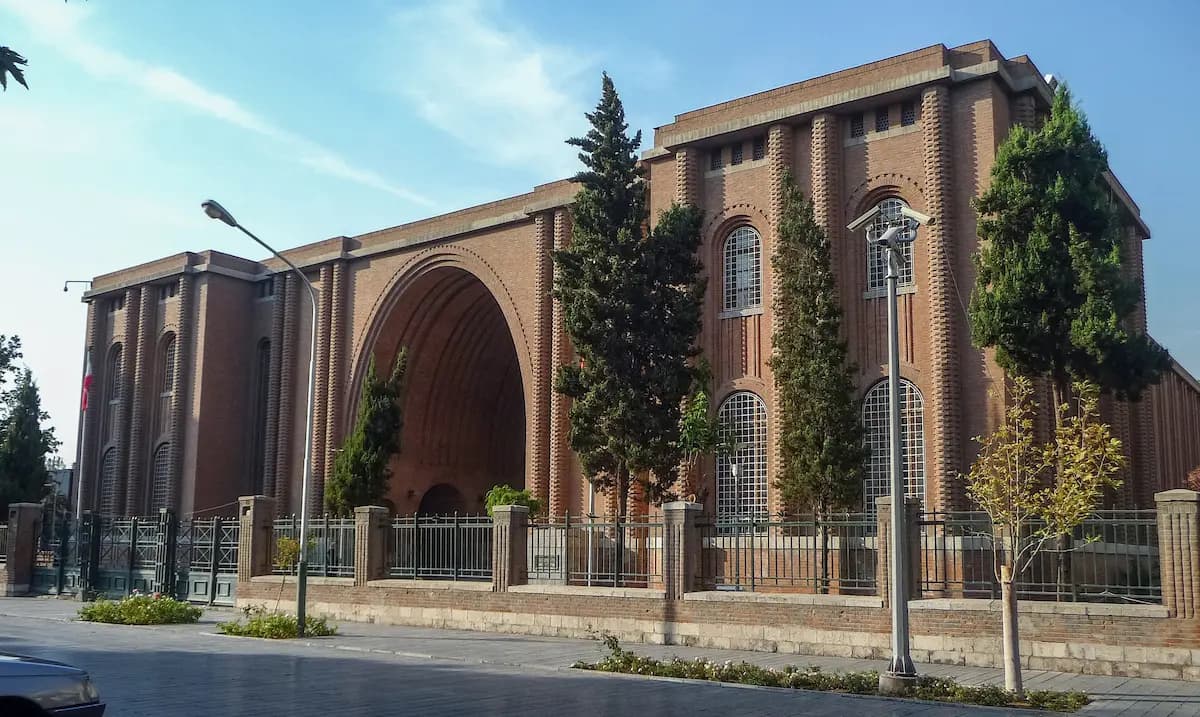
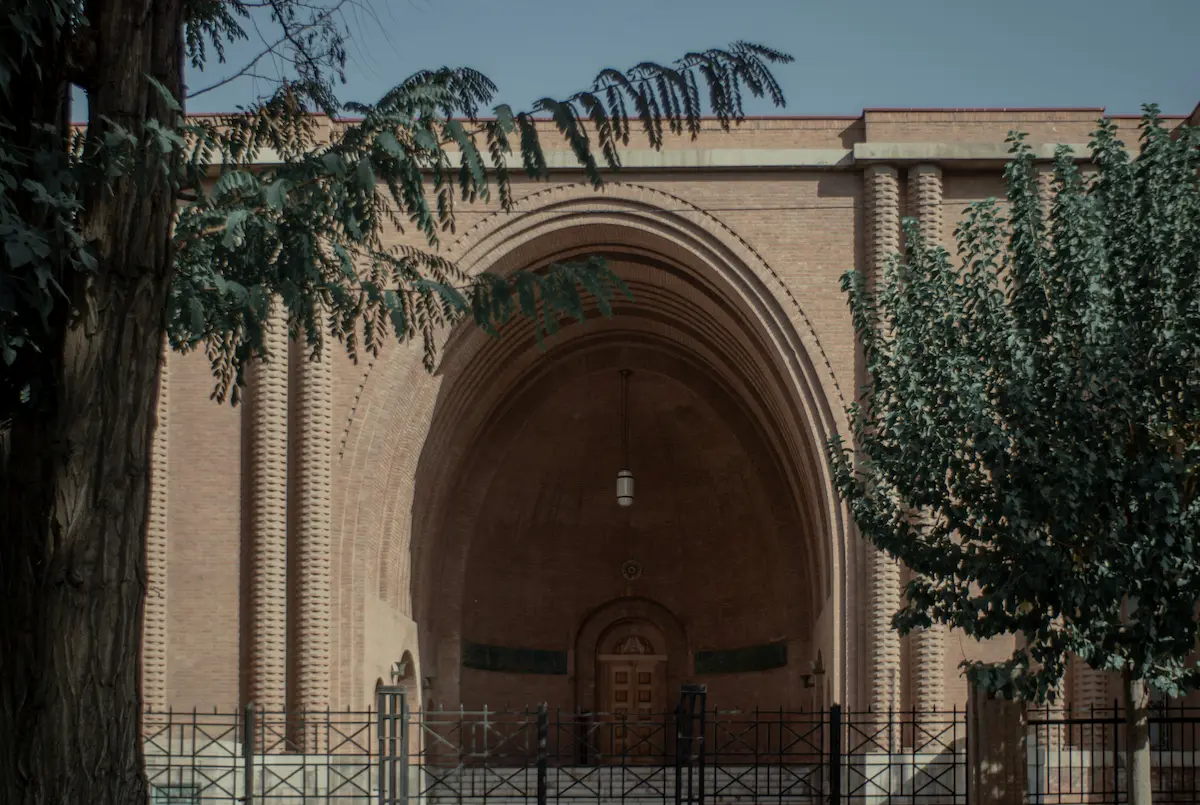
Designed by André Godard, the main building is an architectural masterpiece rooted in Iranian antiquity. Godard intentionally designed the structure to evoke the grandeur of one of the country’s most iconic historical buildings: the Taq Kasra (Arch of Ctesiphon), a colossal Sassanid-era archway. The main entrance transom is built in this ancient Iranian architectural style. The deep, dark red brickwork deliberately represents the architecture of the Sassanid era (3rd to 7th centuries AD). This rectangular, three-storey building of the National Museum of Iran, with its blend of European early-20th-century modernism and millennia-old Persian imperial aesthetics, provides a fitting home for treasures from Persepolis and beyond.

The Symbolic Design of the Islamic Era Museum

In contrast, the second building, dedicated to the post-Islamic era (completed in 1996), features a distinct architectural plan. Its layout is structured around the Sassanid-era Chalipa (cross) design, symbolically bridging the gap between Iran’s imperial past and its Islamic future. This modern structure continues the theme of drawing inspiration from native architectural traditions to house a collection that celebrates continuous cultural evolution. The overall complex utilizes its space not just for exhibition but also for specialized functions, including a Library Hall for archaeology and a Lecture Hall, underscoring the museum’s commitment to both preservation and scholarly discourse.

Unveiling Priceless Treasures: The National Museum of Iran's Collections

The collections of the National Museum of Iran are divided chronologically between the two buildings, covering an astonishing 30,000 years, from the Paleolithic era to the early 20th century. For any traveler, navigating these halls means witnessing the entire timeline of one of the greatest civilizations ever known, providing an unparalleled National Museum of Iran Guide to the nation's heritage.

Pre-Islamic Masterpieces: From Stone Age to Sassanids

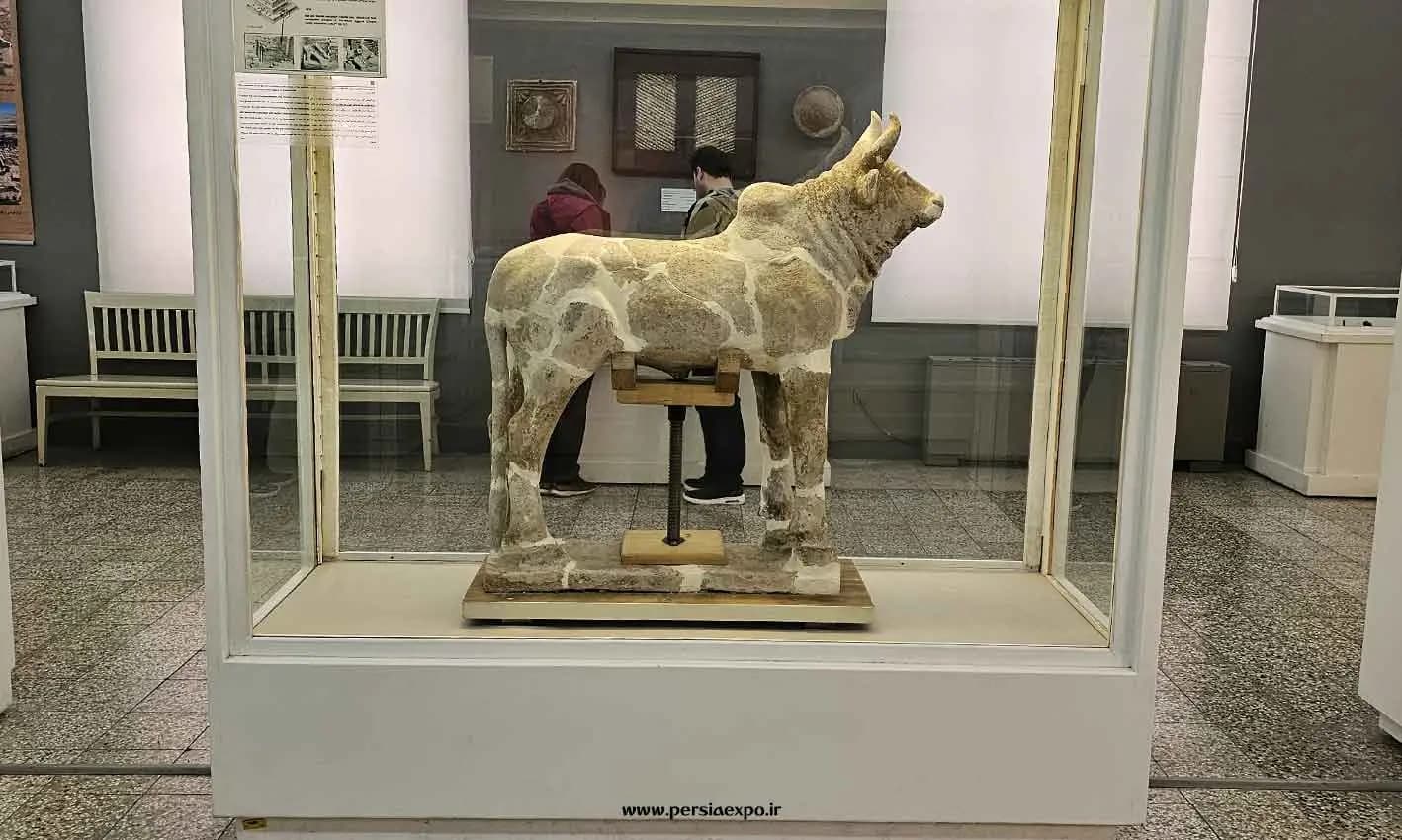
This section, primarily on the first floor of the Museum of Ancient Iran, is dedicated to Paleolithic, Prehistoric, and historical antiquities up to the Sassanid era. It's an overwhelming display of ancient Persian artifacts found through scientific excavations across Iran. You'll find the earliest stone tools, exquisite pottery dating back 11,000 years adorned with animals and primitive human forms, and intricate metalwork. Highlights include the Lorestan Bronze Age objects, renowned for their elaborate horse motifs. The Achaemenid Empire's glory is captured through high reliefs from Persepolis and Shush, magnificent capitals, and golden and silver tablets, including the famed Xerxes I Golden Bowl. The Parthian and Sassanid eras are represented by unique sculptures, turquoise earthenware, and spectacular silverwares depicting hunting and festive ceremonies. Many of these treasures were unearthed from sites that can be explored on day trips from Shiraz.

Special Exhibits: The Salt Man and Ganjineh Hall

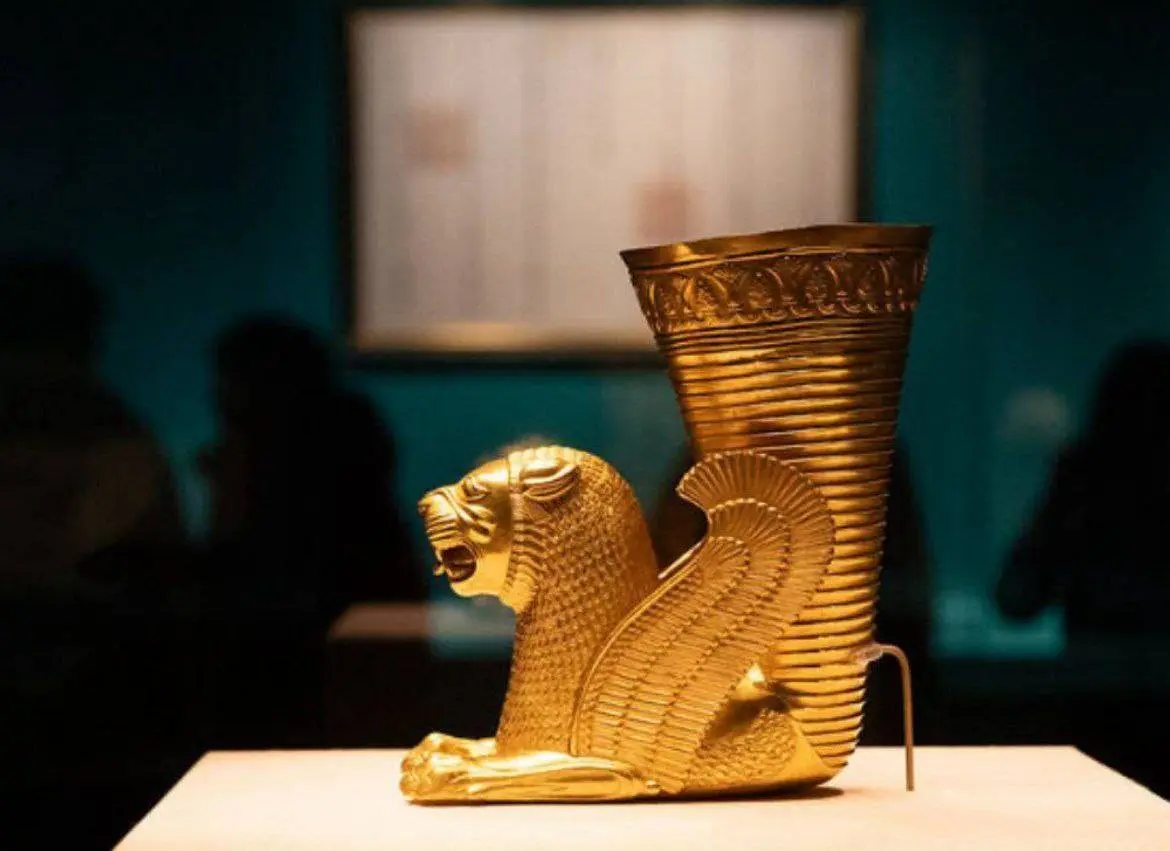
Some artifacts at the National Museum of Iran stand out not just for their beauty but for their unique historical significance. The 'Salt Man' (Mard-e Namaki) is one of the most spectacular works: the mummified remains of a man, dating back about 1,700 years, discovered in the Chehrabad Salt Mine near Zanjan. His preservation, due to the natural salt environment, offers an invaluable glimpse into the life and clothing of people from the Sassanid era. The Ganjineh (Treasure) Hall, located on the southwest side, is dedicated to the most exquisite and precious artifacts, including the Hasanlu Gold Chalice, the Achaemenid-era Golden Goblet, and gold objects from Ziwiyeh, showcasing the pinnacle of ancient Iranian craftsmanship.

Islamic Artistry: A Legacy of Innovation

The second building, the Museum of the Islamic Era, showcases the rich and continuous development of art, philosophy, and technology after the Arab invasion of Iran, covering the Samanid, Seljuq, Ilkhanate, Timurid, Safavid, and Qajar dynasties. Here, the evolution of earthenware and ceramics is breathtaking, from gold-colored containers of the 9th and 10th centuries to the vibrant, colorful dishes from Neyshabur and the exquisite Safavid-era designs. Magnificent bronze and iron metalwork, often featuring intricate lattice and damascene styles with elegant Naskh and Sals scripts, demonstrate metallurgical prowess. The collection also boasts exquisite Qurans written on gazelle skin, illuminated manuscripts like the Shahnameh, and glorious textiles and carpets from the Safavid era, renowned for their intricate silk and gold thread designs. Architectural elements, such as the Plaster Altar of Imamzadeh Karrar and the Ardabil Chini Khaneh, offer further insight into Iran's continuous artistic and cultural legacy.

Planning Your Visit: National Museum of Iran Visitor Information

To ensure a smooth and memorable visit to the National Museum of Iran, Tehran, here is all the essential information you need to plan your trip. For the most up-to-date details, especially regarding prices and seasonal changes, always check official sources or confirm upon arrival. This section acts as your comprehensive National Museum of Iran Guide for practicalities.

Key Details: Address, Accessibility, and Contact

The National Museum of Iran is located on Imam Khomeini Street, Si-e Tir Street, Tehran. The main complexes are generally designed to accommodate visitors with mobility challenges; check with entrance staff for ramp and elevator availability. For contact information and the official website, a quick online search will provide the most reliable, up-to-the-minute details, ensuring you have the latest information for your visit.

Tips for an Enriching Experience

A visit to the Iran National Museum is a massive undertaking, so plan for a minimum of 3 to 4 hours to adequately cover both the Museum of Ancient Iran and the Museum of the Islamic Era. History buffs could easily spend a full day. Generally, non-flash photography is allowed for personal use, but always respect signage. Large bags may need to be checked. Look for the on-site café for a break and the museum shop for high-quality souvenirs. Highly recommended for international visitors are audio guides or official human guides available for hire at the entrance, who can provide invaluable context and depth to the vast collections of the National Museum of Iran.

What to Do at the National Museum of Iran

Explore Both Museum Buildings

Dedicate time to both the Museum of Ancient Iran and the Museum of the Islamic Era to fully appreciate the chronological span of Persian history and art.

Seek Out the Salt Man

Don't miss the incredibly preserved 'Salt Man', a unique archaeological find offering a direct glimpse into ancient life.

Visit the Ganjineh (Treasure) Hall

Marvel at the most exquisite and precious artifacts, including the Hasanlu Gold Chalice and other imperial treasures.

Combine with Nearby Historical Sites

Leverage the central National Museum of Iran location to visit nearby attractions like Golestan Palace and the Tehran Grand Bazaar for a full day of cultural immersion.

Your Essential Travel Guide to the National Museum of Iran

Best Time to Visit

The most enjoyable time to visit Tehran itself is during the Spring (March to May) or Autumn (September to November) for mild weather. For a more tranquil museum experience, aim for a weekday morning (Tuesday or Wednesday), right after the doors open, to avoid crowds.

Getting There

The National Museum of Iran is easily accessible by public transport. The closest metro station is Imam Khomeini Station (Lines 1 and 2), which is a short, pleasant walk away. Taxis and ride-sharing apps are also readily available throughout Tehran.

Entrance Fee

For international tourists, the approximate cost is $4-5 USD. Please note that due to currency fluctuations, these dollar equivalents are approximate and subject to change. It's advisable to carry Iranian Rial (cash) and confirm the price at the counter. You will generally need to purchase separate tickets for the Museum of Ancient Iran and the Museum of the Islamic Era.

Visiting Hours

Typical National Museum of Iran opening hours are 9:00 AM to 5:00 PM (Winter) and 9:00 AM to 7:00 PM (Summer). The museum is generally closed on Mondays. Always confirm exact opening hours on the day of your visit, as they can change based on national holidays or official announcements.

Frequently Asked Questions

Author: Deytrips Team
Was this content helpful?

Ready to Discover Ancient Persia?

Let DeyTrips craft your perfect itinerary through Iran's rich history, including the magnificent National Museum of Iran. Experience the cradle of civilization firsthand.

Plan Your Iran Adventure